
Brentwood Previous Residents by Era
A Brentwood house history works through overlapping eras. Deeds identify transfers, tax books attach an assessee to an annual date, directories can name an occupant, census schedules describe a household, and newspapers record events. No single source carries the full trail, so the table marks both coverage and gaps.
| Source | Years It Covers | Where Held | What It Shows |
|---|---|---|---|
| RecorderWorks recorded-document index | 1986 to present online for person-organized coverage | Contra Costa Clerk-Recorder portal and Martinez counter | Parties, instruments, dates, APN or legal-description links, and title events |
| Assessment and tax books | Annual 1850 to 1910 summary; rescued 1850 to 1904 subset has missing years | Assessor, Treasurer-Tax Collector, and Contra Costa History Center | Assessee, situs and mailing clues, values, and annual land context |
| Federal census schedules | 1850 to 1950 public; 1960 opens in 2032 | NARA, FamilySearch, and library databases | Household members, ages, relationships, occupations, and location clues |
| Brentwood News | Publication history 1902 onward; NewsBank July 2001 onward; Antioch film March 1937 to September 1998 | Contra Costa County Library and its newspaper services | Obituaries, society notes, property notices, and local events |
| City permits and planning files | Exact digitized start not located | Brentwood Community Development counter, tools, or CPRA route | Project address, applicant, owner, contractor, work description, and dates |
| City, telephone, and reverse directories | Exact Brentwood publisher and year run not verified | Library catalog, History Center, FamilySearch, or a cataloged local volume | Occupant, head of household, address, occupation, and reverse entries when present |
| Brentwood Sanborn map | December 1903 catalog item H-28 | Contra Costa County Historical Society and map catalogs | Footprints, materials, uses, and possible former numbering clues |
Start with the era in question. Use the parcel and recorder index for a recent transfer; pair an older directory or census year with tax books and newspapers; add permits and maps for a structure. The result is dated evidence for Brentwood previous residents, not a continuous invented list of previous residents.
Current tax access begins at the Contra Costa property-tax information page, which explains the APN or situs route and the Treasurer-Tax Collector channel.
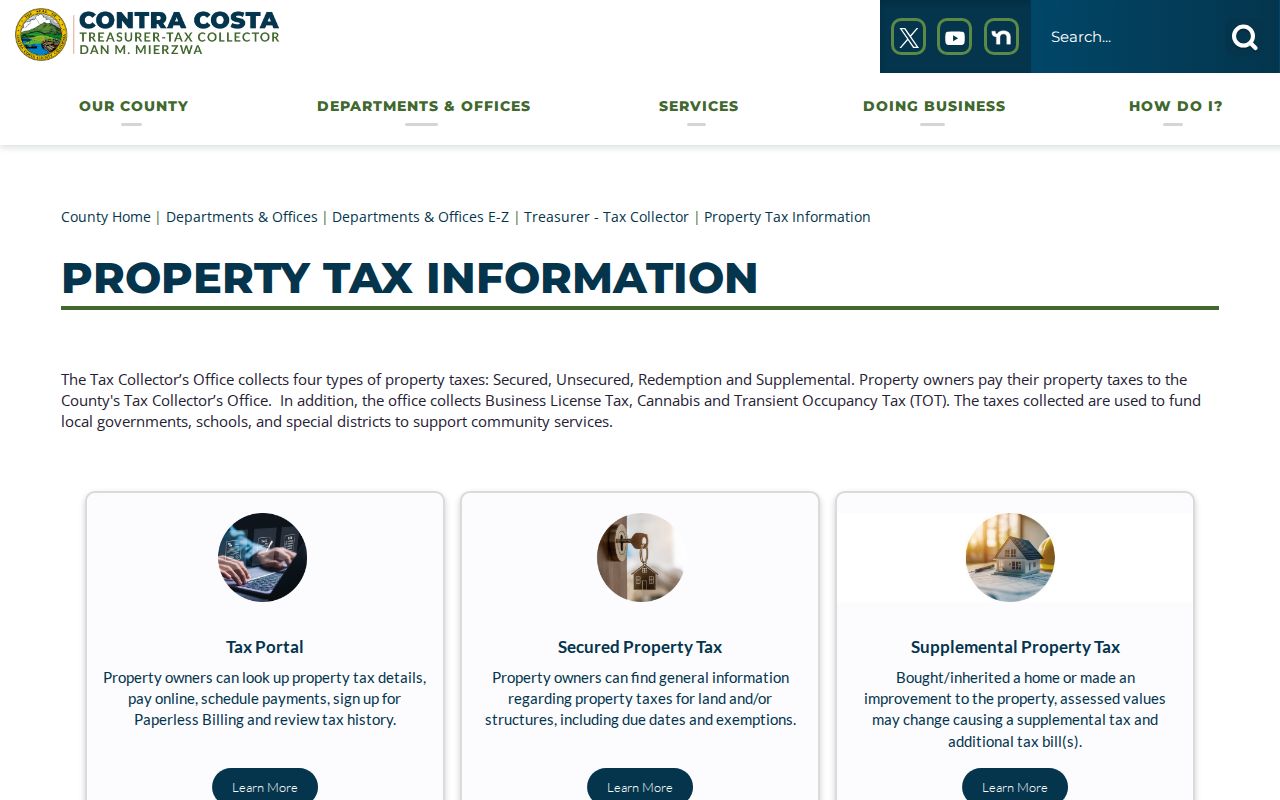
The tax capture connects a present parcel to the annual record system without naming every occupant.
Start a Brentwood House History with Today’s APN
Old surnames are a poor starting key. Begin with the current Brentwood address in ParcelQuest Lite or CCMAP, save the APN and outline, and compare situs with mailing address. The county map accepts APN or street address but omits owner names online; the public roll is a counter or printout channel.
GeoVault adds city limits, annexations, subdivisions, footprints, zoning, districts, roads, and aerial context. It can show whether an old address is the same land, a later subdivision, or outside incorporated Brentwood. The Brentwood street directory address workflow covers the current chain.
Keep APN, legal description, situs, mailing address, source, and access date separate. A January 1 assessee can lag a transfer, and a mailing address can belong to a trust, manager, or service.
RecorderWorks Before and After 1986
The verified person-organized RecorderWorks online range for Brentwood begins in 1986. It supports person or business, APN, legal-description, document-number, book/page, map, and date modes. The general gateway did not publish a separate earliest online year, so pre-1986 work is a counter and legacy-index problem.
Use the Contra Costa recorded-document hub for Recorded Documents Search and Ordering. Person mode accepts LAST FIRST, partial matches, and a date pair; APN or legal description is safer than a guessed old street spelling.
For earlier Brentwood previous residents, visit or call the Clerk-Recorder at 555 Escobar Street in Martinez, phone 925-335-7900, and ask for the earliest searchable volume. Counter or mail ordering is separate from a free index search.
The Clerk-Recorder also holds county births, deaths, public marriages, fictitious business names, notary oaths, and related filings. See the County Clerk-Recorder information page when a family clue leaves the deed chain.
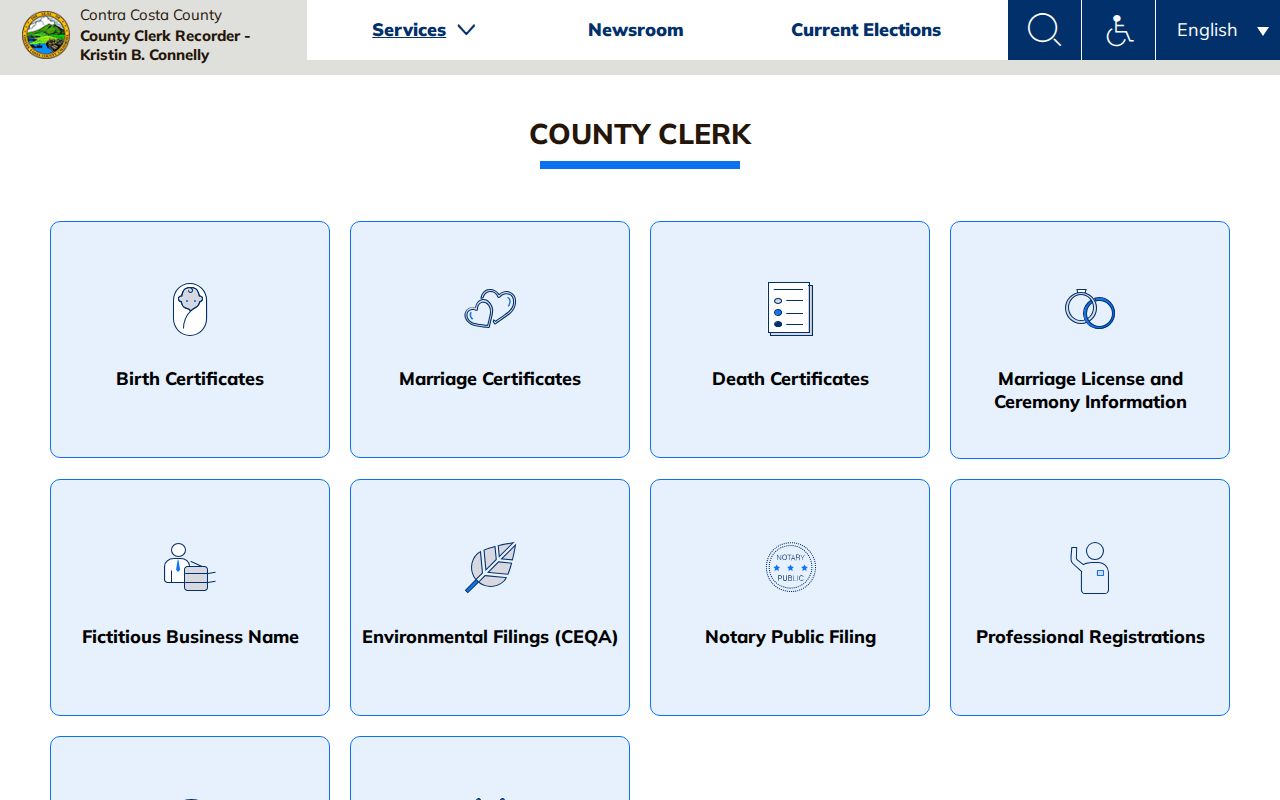
The Clerk capture shows the custodian network around a deed trail when a transfer needs a dated family event.
Walk the Brentwood Deed Chain Backward
A chain of title is the linked history of recorded interests in one parcel. For Brentwood previous residents, it is a land backbone, not a household census. Start with the current assessee and legal description, find the acquisition deed, then move from seller as grantor to that person's earlier grantee role. Repeat only when the same parcel or description confirms the land.
- Pull the assessment entry and note APN, assessee, situs, mailing address, and legal description.
- Find the purchase instrument in RecorderWorks and note date, number, and grantor.
- Search that grantor as an earlier grantee, testing variants and dates.
- Compare lot, block, subdivision, APN, or metes-and-bounds language before joining the next deed.
- When 1986 coverage ends, move to the Martinez counter, legacy index, or earlier book.
- Grantor and grantee
- The grantor conveys or releases an interest; the grantee receives it. The role can change in the next instrument.
- Chain of title
- Linked recorded transfers or interests that follow one parcel through time.
- Legal description
- Lot, block, subdivision, survey, or metes-and-bounds language that outlasts an old street label.
- Index versus image
- The index is a finding aid; the image supplies full parties, description, stamp, and redactions.
Deeds of trust, releases, liens, notices, maps, and affidavits can mark financing, subdivision, or death. They do not establish residence by themselves.
Brentwood Tax Books and Assessment Clues
Annual tax books can bridge a deed gap. The collection summary describes assessor books from 1850 through 1910, while a History Center account describes a rescued 1850 to 1904 subset with missing years. A surviving book can place an assessee or value in a year; a missing volume proves nothing.
Older rolls use the History Center and custodian channels. Current lookup runs through the Treasurer-Tax Collector by APN or situs. Internet bill copies are retained up to five years; older material may require the counter, a request, or an archive inquiry. Compare annual and deed dates.
Local record story. Louis Stein's 1984 donation helped preserve hard-copy assessment volumes during the county's shift toward microfilm. The History Center is part of the evidence chain.
Brentwood Directories Matched to Census Years
Directories and census schedules answer different household questions. A directory can place a person at an address between census years, while a census can show relationships and ages. Pair them rather than asking either one to carry the story. Public releases cover 1850 to 1950; 1960 opens in 2032 under the seventy-two-year rule.
- Choose a nearby directory or newspaper year and copy initials, spouse notation, occupation, and street number.
- Compare the nearest 1900, 1910, 1920, 1930, 1940, or 1950 census using NARA guidance, FamilySearch, or a library database.
- Check the surname and address in tax material, noting owner, householder, boarder, or other entry.
- Use Brentwood News, yearbooks, maps, and permits to test a move, death, marriage, or construction event.
- Log first appearance, address change, and disappearance as separate dated observations.
The exact Brentwood city, telephone, and reverse-directory run is not verified. Search the County Library, History Center, FamilySearch, and local catalogs title by title. Collection details belong with the Brentwood city directory research; this method uses entries needed to test one address.
Brentwood Newspapers, Vital Events, and Probate
Newspapers can explain why an occupant disappears. The library holdings list Brentwood News from 1902, NewsBank from July 2001, and Antioch film from March 1937 to September 1998. Search obituaries, estate notices, society columns, property notices, and permit stories by surname, street, and place. The East County Historical Society adds family files, photographs, maps, and organization binders.
Vital records have different access rules. Contra Costa handles county births, deaths, and marriages; CDPH supplies statewide certified records and specified years. Authorized copies require an eligible requester and sworn statement, while informational copies carry a not-valid-for-identity legend. No single opening-age rule applies to every event.
Probate can distinguish death, inheritance, and a move. The History Center reports historic court and probate indexes from the 1850s, physical files through 1911, and some series into the 1950s. The local cemetery district has a printable map, but no online name index was found.
The California vital-record fee and ordering page shows the current state copy channel.
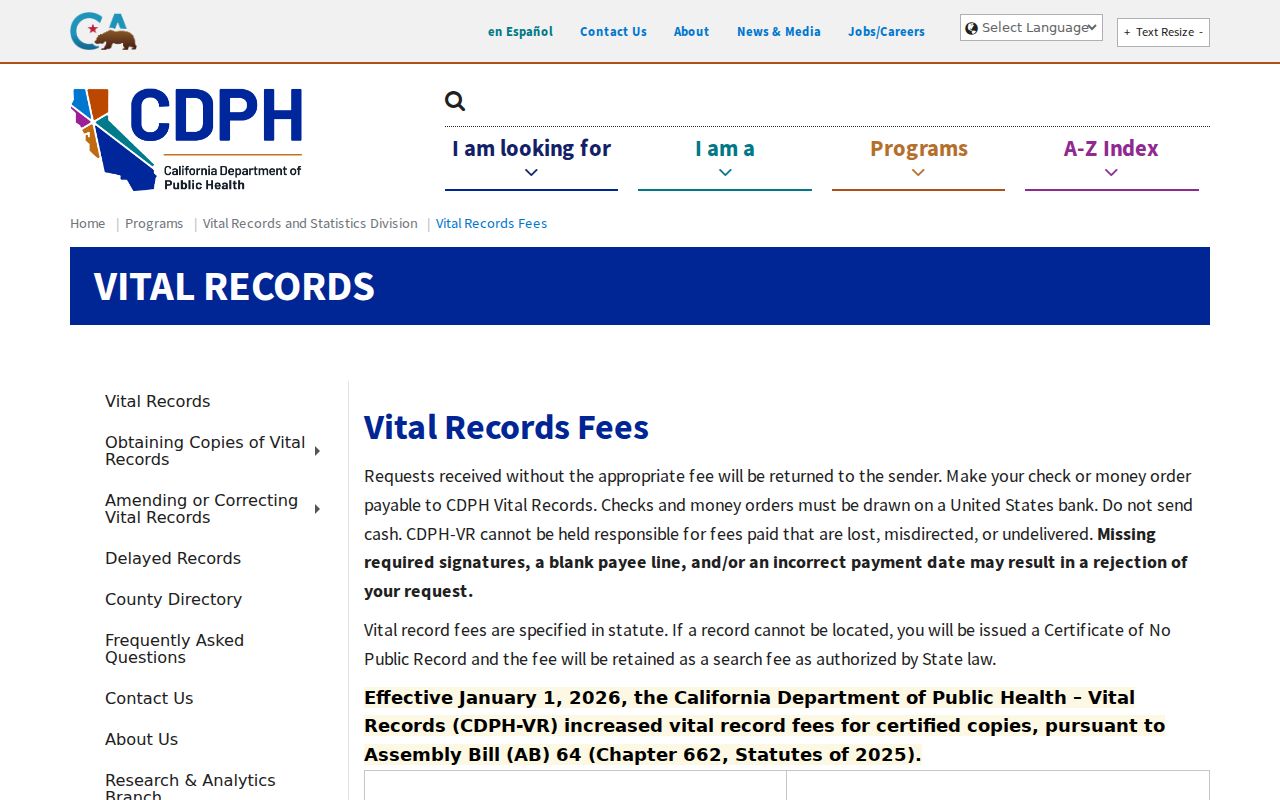
The state capture marks the source change: an obituary suggests an event, while the county or state application supplies copy rules.
Brentwood Permits and Sanborn H-28
Building history can anchor a former-resident search. Brentwood Community Development files may name the project address, applicant, owner, contractor, work, valuation, and dates. The exact digitized start was not located, so use the project tool, counter, or an identifiable request by address, APN, project number, and date.
The Brentwood Sanborn catalog includes a December 1903 item labeled H-28, one inch to fifty feet, attributed to Balfour, Guthrie & Co. The History Center collections also record that the company bought Rancho Los Meganos in 1910. That chronology puzzle requires inspection of the title, cartouche, context, and catalog record.
Maps show footprints, materials, uses, roads, and sometimes former numbering. They do not name every household. Pair a Sanborn clue with the same parcel's deed, tax book, newspaper, or directory entry, and state which record supplies the date.
Brentwood Annexation and Address Continuity
A modern Brentwood address may not match an older description after subdivision, annexation, mapping, or a road-label change. Use GeoVault Annexations, Subdivisions, city-limit, parcel, road, and sphere layers, plus the 2017 address map when tracing previous residents.
Brentwood incorporated in 1948, so nineteenth-century histories depend on county deeds, tax, court, map, newspaper, ranch, and civic records. “Brentwood 94513” can cover rural land beyond the city; confirm parcel and jurisdiction.
No verified global street-renumbering schedule was located. If a directory, deed, or map uses a former number, record that uncertainty and look for a lot, block, subdivision, APN, or cross street that can make the bridge.
Brentwood Previous Residents and Lawful House History
Previous residents research is strongest for family history, preservation, genealogy, an estate question, or a respectful historic account. An old directory name is a clue, not permission to publish present details. The 1852 enumerator apparently missed John Marsh's ranch, later requiring assessment and baptismal evidence to repair the gap.
For an identifiable but offline file, the Contra Costa public-records route accepts a description, date range, department, and address or project number. CPRA inspection is generally free, with a ten-day determination and possible written fourteen-day extension. It does not override court, vital, voter, or protected-address rules.
Preserve dates, page numbers, document numbers, and the difference between an index and an image. The county request route is also the fallback for a missing permit or planning file.
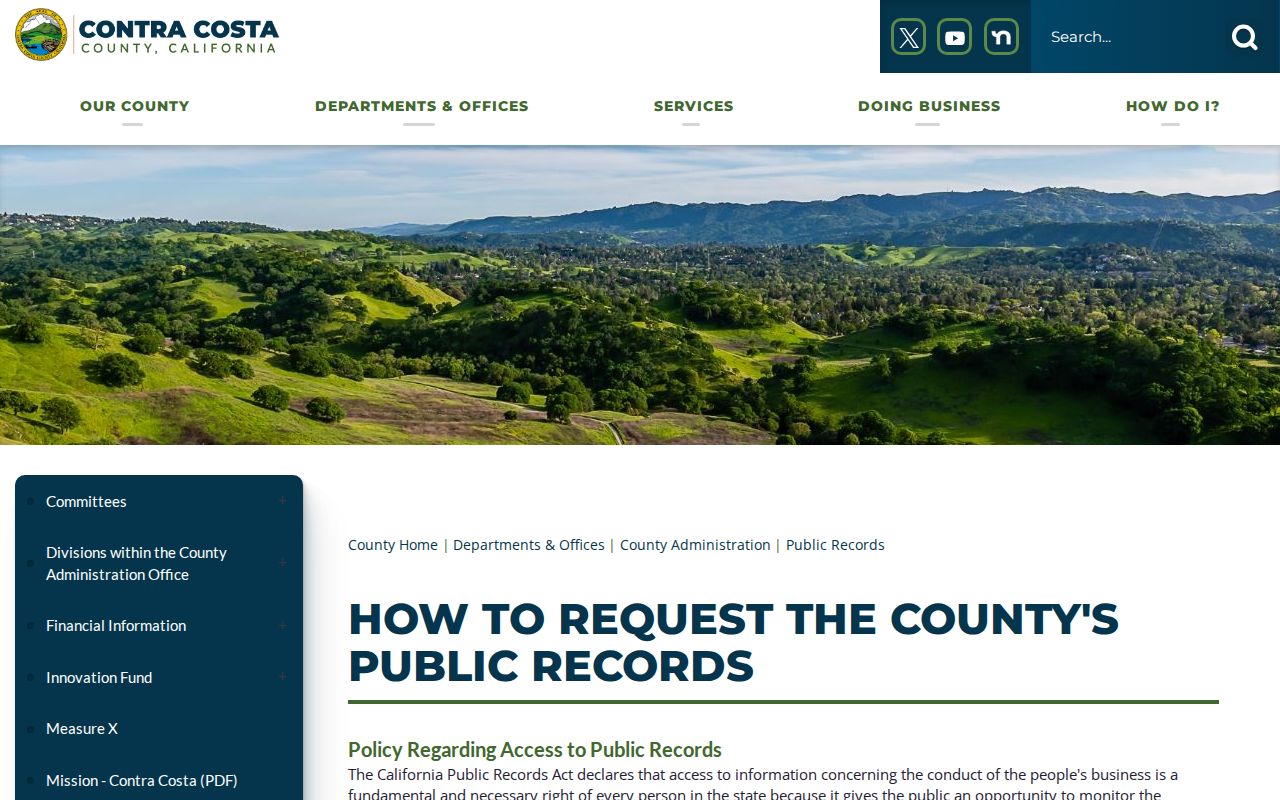
The request capture shows the formal route for an identifiable local file when an older clue is not online.
Lawful house history. Brentwood previous residents research is for family history, genealogy, preservation, and personal curiosity. Do not use a past address record to stalk, track, harass, intimidate, or harm a living person.